
Lynda Williams
DANILA BOTHA, A PLACE FOR PEOPLE LIKE US.
hamilton, on: guernica editions, 2025. $25.00
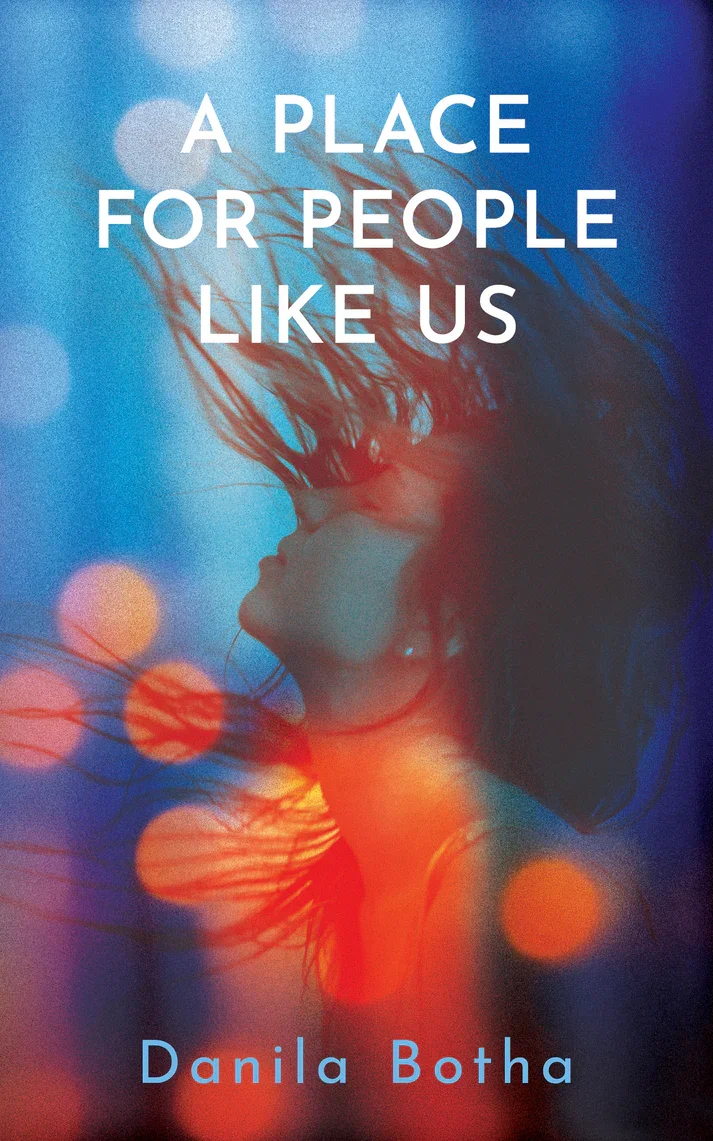
Danila Botha’s second novel, A Place for People Like Us, is a pulsing cross-section of one woman’s life in her early twenties, a thorough investigation of the deep-seated need she feels for belonging, and the concessions she is willing to make to maintain it.
The novel follows twenty-one-year-old Hannah, who was molested by her father—a pedophile and cult leader—on her quest to find her place in the world as an independent adult. This desire to belong and to forget the nightmare of her childhood has led her through substance abuse and addiction, but as the story begins, Hannah is nurturing a newfound sobriety as she navigates a prestigious business program at university. She meets the charismatic Jillian and immediately falls in love with her larger-than-life personality. Together they work at their respective creative pursuits and become roommates and lovers in what soon becomes an ill-defined situationship. Things shift for Hannah when she starts dating a classmate, Mark Goldwater, and she begins to envision a different, more stable life that she might actually want. Mark is from an extremely wealthy Orthodox Jewish family, and when he and Hannah become serious, he asks her to convert so they can be married. The decision she makes, and Jillian’s increasing jealousy in response, confront the reader with difficult questions about both the cost and the meaning of acceptance.
Hannah’s complexity is the book’s greatest triumph. Although her decisions lead to difficult and sometimes disastrous consequences, her concurrent, conflicting desires for both safety and stability, and freedom and possibility, generate a nearly unbearable amount of tension through the narrative. Throughout much of the book, it’s unclear which person, pathway, and life might prove more toxic, but Hannah’s desire to hang on to both as long as she can guarantees peak page-turning drama. Eventually, the willingness she shows to make herself small—to withhold her opinions for the sake of a speedy and simple conversion to Orthodox Judaism—creates a sense of danger that regressively echoes the circumstances of her childhood experience in a cult: anyone is welcome, and can belong, provided they don’t have the audacity to think or act for themselves. On a shopping trip for a more modest wardrobe, Chaya (Hannah’s tutor for all things Jewish) explains, “The way we [women] dress, and more than that, the way we hold ourselves, is an extra layer of protection.” Hannah’s unarticulated response does not bode well for her modest future: “I wanted to tell her that what she was saying was wrong, that things happened no matter what you wore, or didn’t wear, or what you wanted, or didn’t want.”
Ironically, Hannah’s instinct to bite her tongue seemingly makes her the perfect match for the Goldwaters’ brand of Judaism, which is very much “do as I say, not as I do.” Beneath the veneer of their strict observation, Hannah uncovers secret after family secret, often in the form of forbidden relationships. Her sister-in-law’s philosophy regarding postpartum weight loss summarizes the family’s view on both life and religion: “There’s what you tell people you’re doing and what you actually have to do.” Ultimately, in this version of reality she has chosen, belonging is an appearance one has to maintain, and the only question is how long Hannah will be able, and willing, to keep it up.
As Hannah navigates her religious conversion, Jillian becomes entangled in a complex health crisis and struggles to be supportive of her friend’s life-altering decisions. Having been raised in an Orthodox Jewish family herself, Jillian is well equipped to understand exactly what Hannah is risking with her choices, but her status as a scorned lover makes it difficult for Hannah, or the reader, to gauge the motivations or genuineness of her concern. This tension between what people are, and how they seem, drives the novel. A delightful feast of messy, complicated characters struggling to belong in a world that is quick to judge them, A Place for People Like Us is an insightful and nuanced study of the discovery, development, and disintegration of acceptance as both a journey and a destination.
lynda williams
(she/her) is the author of The Beauty and the Hell of It & Other Stories. Her work has appeared in Grain, The New Quarterly, and The Humber Literary Review. She is a graduate of the Humber School for Writers and a recipient of the Lieutenant Governor of Alberta Emerging Artist Award.