
J.M.
BRAD SMITH, Billy Crawford’s Double Play.
hamilton, on: wolsak & wynn, 2025. $24.00
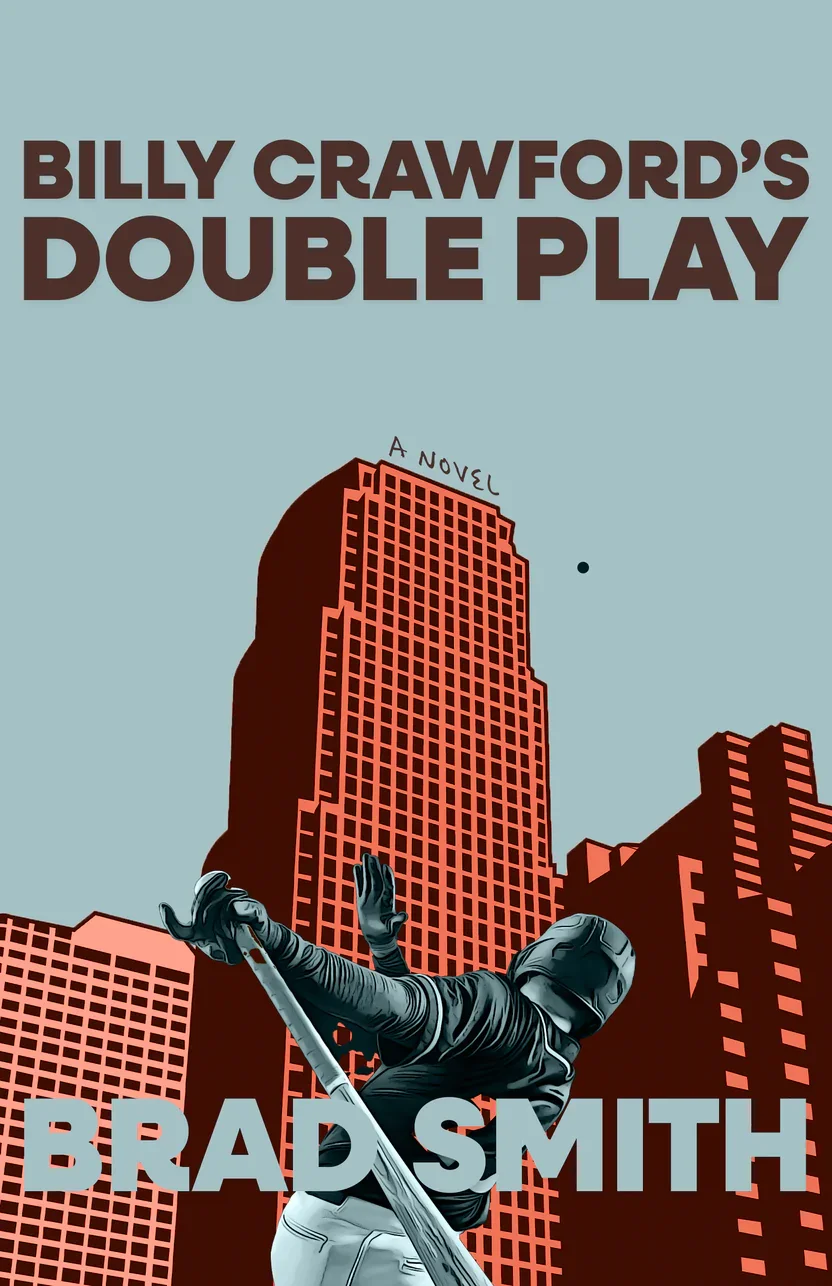
One of the greatest things about baseball is its unpredictability; one never knows how a game might turn out. The very same can be said about Brad Smith’s fifteenth novel, Billy Crawford’s Double Play, which follows the fortunes of the star outfielder of the fictional Rose City Rounders. The author throws his readers a regular diet of breaking balls that will keep them rapt in anticipation until the last sentence. But this is more than just a baseball novel; it’s also a page-turning political thriller following three rookie mayoral candidates who are thrown off their respective gameplans as they navigate relationships, politics, and morality in the run-up to the municipal election in Rose City.
First to the plate is Carroll Miller, rich businessman and owner of the Rounders, whose campaign is built on a dubious promise to help the homeless by destroying precious local farmland to build more housing they probably won’t be able to afford. Staring down from the mound at Miller is Kate Simmons, the daughter of Rose City’s longtime and incumbent mayor, hoping to extend her family’s political dynasty. After a televised debate pulls the count into Kate’s favour, Miller’s campaign manager suggests a pinch-hit addition to the lineup: a popular new candidate with views similar enough to Simmons so as to split the vote and bring the count back into Miller’s favour. Rounding out the political order, then, is the titular Billy Crawford himself, a local baseball hero who, in the twilight of his successful playing career, finds himself slumping his way towards forty and in need of a spark. So while it seems out of left field when the Rounders suddenly release Billy from the team, the gameplan is revealed when Miller hires fan-favourite Billy back—on the condition that he run for mayor as a third-party candidate.
Billy Crawford’s Double Play is not your typical sports story about an underdog rising to glory against all odds, or the camaraderie and youthful fellowship inherent in so many team dynamics. Set in a modern, post-COVID climate, the book is fearless in exploring important social and political issues that will resonate with readers from across the societal spectrum. The issues—homelessness, congestion, wealth inequality, social and political injustice—mean that the people of Rose City are us, and Rose City itself is where we all live.
The characters are, for the most part, charming and engaging, and their ability to find humour, wit, and sarcasm in difficult situations makes them all the more authentic. When Miller implies that his opponent’s platform is designed to merely preserve her father’s outdated legacy, he likens her views to “rotary-dial telephones and poodle skirts”; without missing a beat, Kate (rifling dramatically through her notes) replies “Sorry… I’m just looking to see where I stand on the contentious issue of poodle skirts.” From witty exchanges like this, to unexpected choices the characters end up making, the storytelling is rife with delightful and shocking moments that will elicit recognition, laughter, and even the odd fist-pump in celebration of well-deserved karmic comeuppance.
Interwoven with the main plotline is a constant and brilliant subversion of gender and genre stereotypes. Several powerhouse women (often subjected to jocular and misogynistic jesting) come to the plate in clutch moments to keep the plot moving along. As the world of professional sports continues to devolve around him into a money-making spectacle, Billy comes to both embody and challenge society’s over-glorification of professional athletes who earn an inflated salary for playing a game; the novel’s critique of this issue and others comes through most clearly in the voices of its women. Billy’s begrudging agreement to run for mayor comes at the cost of supporting Miller’s hidden agenda; he draws crowds but shows little to no interest in the election and jumps at any chance to talk baseball instead of politics. To re-set his moral compass, Jessie, the head groundskeeper for Rounders Field (and Billy’s love interest), takes a vocal stand against his disinterested passivity and sets in motion the dazzling double play that brings the game to a close.
With every new curveball, the tension in the novel escalates, punctuating the late innings with the sense that anything might happen. Will the ballplayer, “making a deal with the devil just so he can keep on playing,” reckon with the better angel on his shoulder? Will the corrupted swindler who believes that “everything is legal—if you can get away with it” win the election? Or will the competent big-city lawyer being framed as a political nepo-baby return to save her hometown? Billy Crawford’s Double Play is a book that evokes the essence of baseball in all its triumphs and defeats—structured, competitive chaos rife with unwritten rules and rituals—with the fundamental unpredictability of being human in a world where power, politics, and relationships play out like a game we can neither comfortably control nor simply admire apathetically from the cheap seats.
J.M.
is a fourth-year student in the Creative Writing and Publishing program at Sheridan College. Her favourite genres are creative non-fiction, historical fiction, sports fiction, and literary fiction. She has written several articles for the Sheridan Bruins, covering athletes and sporting events. She is also a volunteer for the 2026 TIAC as one of their community engagement coordinators.